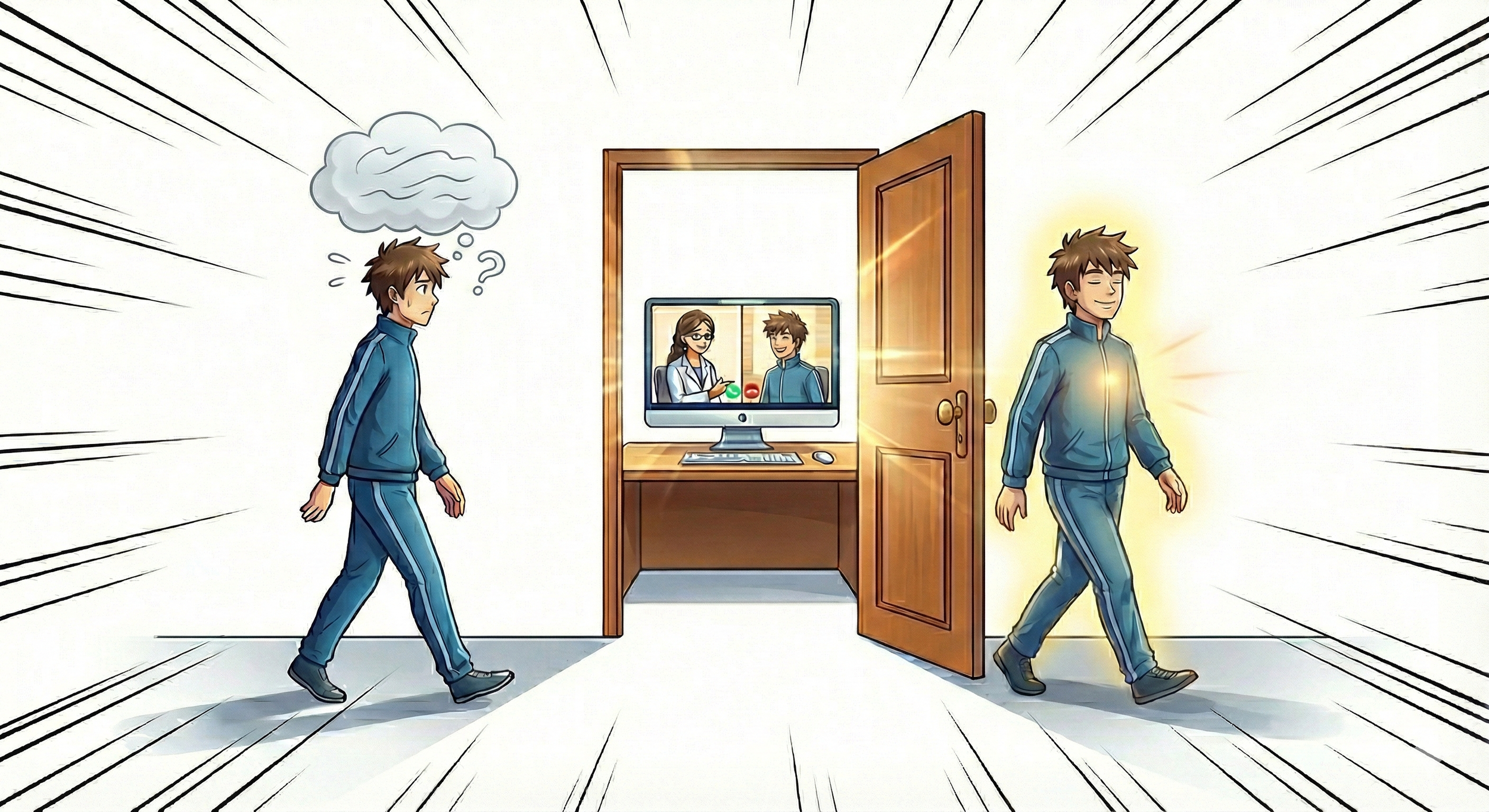
You don’t always need a long-term commitment for psychotherapy. Single-Session Therapy (SST) gives you quick relief and clear direction by focusing on one specific concern in a supportive session. You might find it more effective and focused than you expect.
Does SST Really Work?
Can one session help? Yes, it can. Research shows SST works well for many concerns. Up to 80% of clients find one session helpful, and about 50–60% see real improvement after just one visit.
Dr. Moshe Talmon started this idea decades ago. At Kaiser Permanente, he checked in with clients to learn why they chose just one therapy session. Most felt cared for and satisfied after one visit, with no need for more. This showed that one focused, supportive meeting could be enough. Recent studies, including a 2025 review, confirm that Single-Session Interventions can help people facing anxiety, depression, and stress. SST gives you a focused, encouraging way to make changes.
Psychotherapist and author Windy Dryden says, "People have the capacity to help themselves quickly." SST is built on this idea. It treats you as an active partner in making changes.
SST is great for quick, reassuring support, especially if you have a specific goal right now. Your therapist will help you findresources and plan clear next steps you can take immediately, so you feel supported and confident.
SST is perfect for working on:
· Adjustment difficulties: Getting past a problematic change in your life.
· Decision-making: Gaining clarity on options.
· Mild stress: Learning a quick coping skill.
· Grief: Processing an immediate loss.
· Relationship conflict: Address one communication issue.
· Goal setting: Define an action for your project.
SST makes it easy and quick to get support. Traditional therapy often means long waits, but with SST, you might not have to wait at all. You can get caring help right when a crisis happens or when you’re ready to move forward. Getting help right away can keep small problems from becoming too much. SST gives you timely, accessible support.
An SST session focuses on action. You and your therapist quickly pick a goal and decide on next steps. For example:
Therapist (T): "You mentioned that getting angry at your son's homework time is the main thing you want to change today. If this hour helps, what will look different tomorrow night?"
Client (C): "I won't yell. I want to stay calm, even when he says he doesn't know the answer. I want the whole 10 minutes to feel different."
T: "Staying calm is a good goal. Tell me about a time last week when you almost stayed calm. What did you do right before the yelling started?"
C: "I took a drink of water. I stood up and walked to the window for two seconds. But then I sat down and started yelling."
T: "The water and the walk are steps that worked. How can we use the walk better? For the rest of this session, let's practice what you will tell your son and what you will do with your feet when you feel the anger start."
Here’s the key: SST doesn’t mean your chance for support ends after one session. You can always come back. The One At a Time (OAAT)approach means each session is planned for your current needs, and you can book another whenever you want.
With OAAT, you come in for one focused session to work on your concern. Together, we decide what you want to achieve. If the session solves your issue, you’re done. If you have another challenge or want more support, you just book another session, one at a time, as needed.
OAAT respects your needs and your timing. It takes away the pressure of open-ended commitments and lets you decide when you need help. Support stays flexible, easy to access, and always focused on your comfort.
Ready to work on your concern? Contact the therapists at Psychotherapist.Coach to schedule your Single-Session Therapy or learn more about our other services. Take action today to get support right away.
● Budman, S. H., Hoyt, M. F., & Friedman, S. (Eds.). (1992). The first session in brief therapy. Guilford.
● Dryden, W. (2019). Single-Session Therapy: Distinctive Features (1st ed.). Routledge.
● Schleider, J. L., et al. (2025). Single-Session Interventions for Mental Health Problems and Service Engagement: Umbrella Review...
● Talmon, M. (1990). Single-Session Therapy: Maximizing the Effect of the First (and Often Only) Therapeutic Encounter. Jossey-Bass.


